CISO • LEDGER
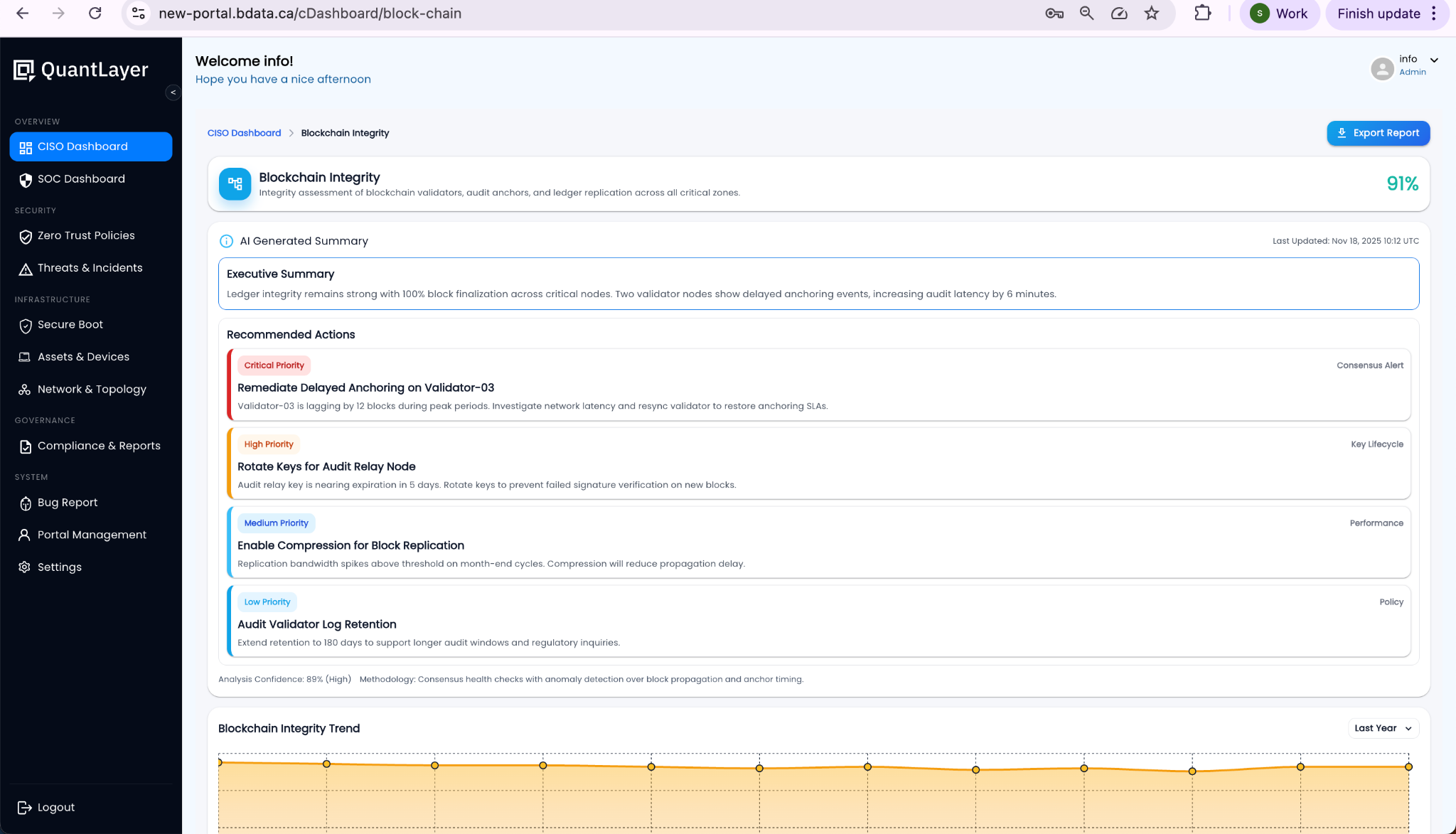
Blockchain Integrity
Integrity assessment of blockchain validators, audit anchors, and ledger replication across critical zones.
What it shows
This page verifies that the evidence layer is trustworthy. If anchoring or replication degrades, you lose assurance. QuantLayer continuously validates validator health and anchoring SLAs.
How it’s calculated
- Consensus health checks over block propagation, finalization, and anchor timing.
- Anchoring SLA monitoring (delays, missed anchors, replication lag).
- Key lifecycle checks for validator/relay nodes (rotation due, signature verification).
What to do next
- 1Remediate delayed anchoringby checking network latency and resyncing validators.
- 2Rotate keysfor audit relay nodes before expiry to avoid failed verification.
- 3Enable compressionwhen replication bandwidth spikes cause propagation delay.
- 4Set retention windowsto meet audit/regulatory requirements.
KPIs to watch
Integrity %
score
Anchoring delay
minutes
Validators healthy
count
Why this matters to a CISO
AI only works if it’s trustworthy
If models drift or confidence drops, you’re flying blind. This keeps the AI layer honest.
Drift is normal in OT
New firmware, new shifts, new processes-all cause drift. You need to detect it early before it erodes detection quality.
Confidence drives automation
You can’t let AI auto-contain based on shaky confidence. This metric ensures automation stays aligned with risk appetite.
Feedback loops improve accuracy
Every analyst decision sharpens the models. This closes the loop between human intelligence and machine learning.
Reference UI Screenshot