CISO • COVERAGE
Threat Exposure Analysis
Highlights detection coverage, AI model deployment footprint, and where attack patterns may not be covered.
What it shows
This section prevents “unknown blind spots.” It quantifies what you can and cannot detect-then recommends where to add sensors, collectors, or enforcement controls.
How it’s calculated
- Coverage rate based on deployed sensors/models versus asset inventory.
- Attack patterns “not covered” derived from threat model mapping + missing telemetry.
- Contextualization links exposures to zones, assets, and likely attack paths.
What to do next
- 1Close the biggest gap first: high criticality zones with low coverage.
- 2Deploy additional models(protocol anomaly, lateral movement, identity abuse) where needed.
- 3Align to MITRE: target missing techniques for improved assurance.
- 4Export the reportas evidence for insurers and compliance reviewers.
KPIs to watch
Coverage rate
%
Patterns not covered
%
Models deployed
count
Why this matters to a CISO
AI only works if it’s trustworthy
If models drift or confidence drops, you’re flying blind. This keeps the AI layer honest.
Drift is normal in OT
New firmware, new shifts, new processes-all cause drift. You need to detect it early before it erodes detection quality.
Confidence drives automation
You can’t let AI auto-contain based on shaky confidence. This metric ensures automation stays aligned with risk appetite.
Feedback loops improve accuracy
Every analyst decision sharpens the models. This closes the loop between human intelligence and machine learning.
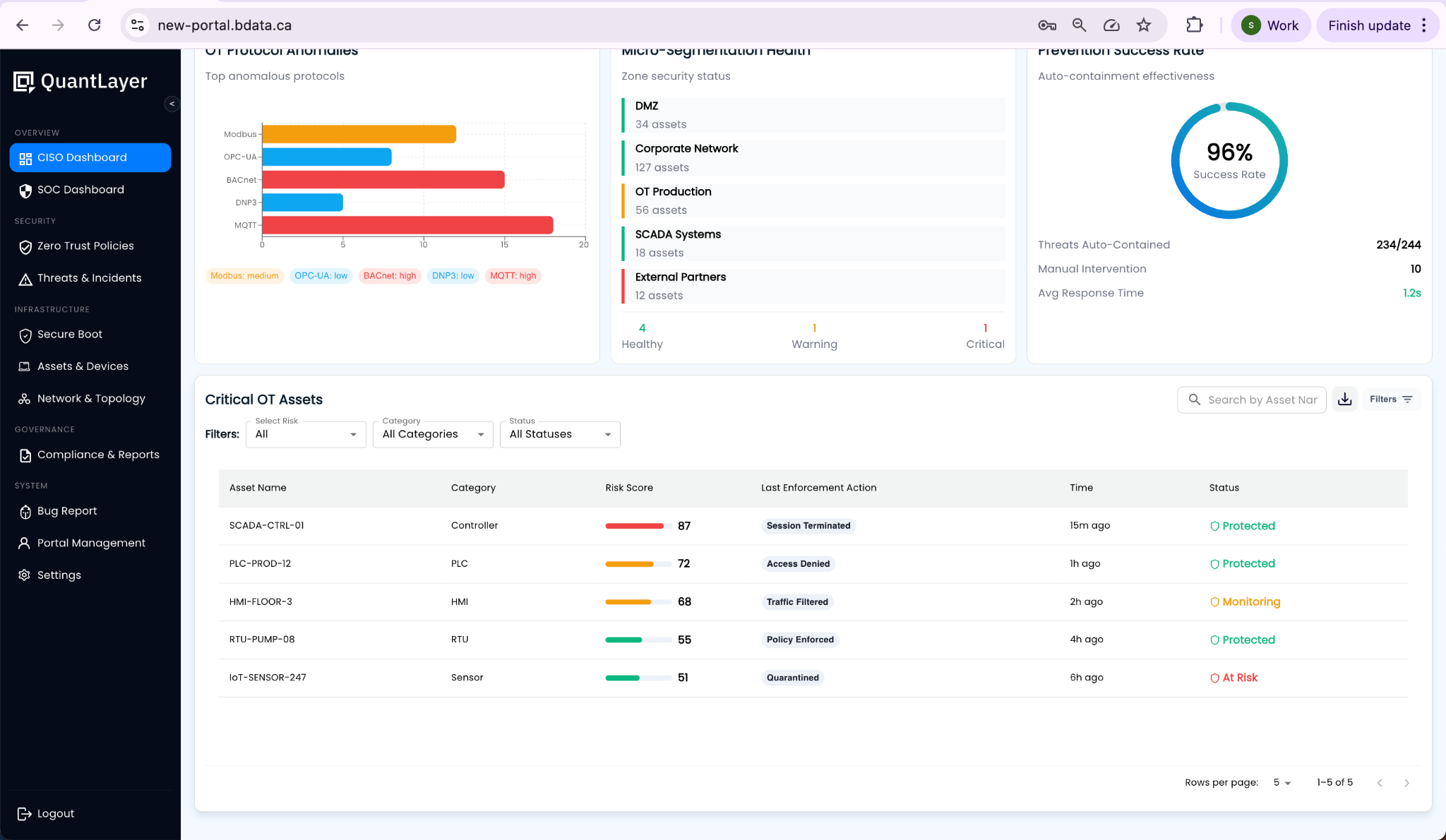
Reference UI Screenshot