CISO • POSTURE
Zero Trust Posture & Compliance Factors
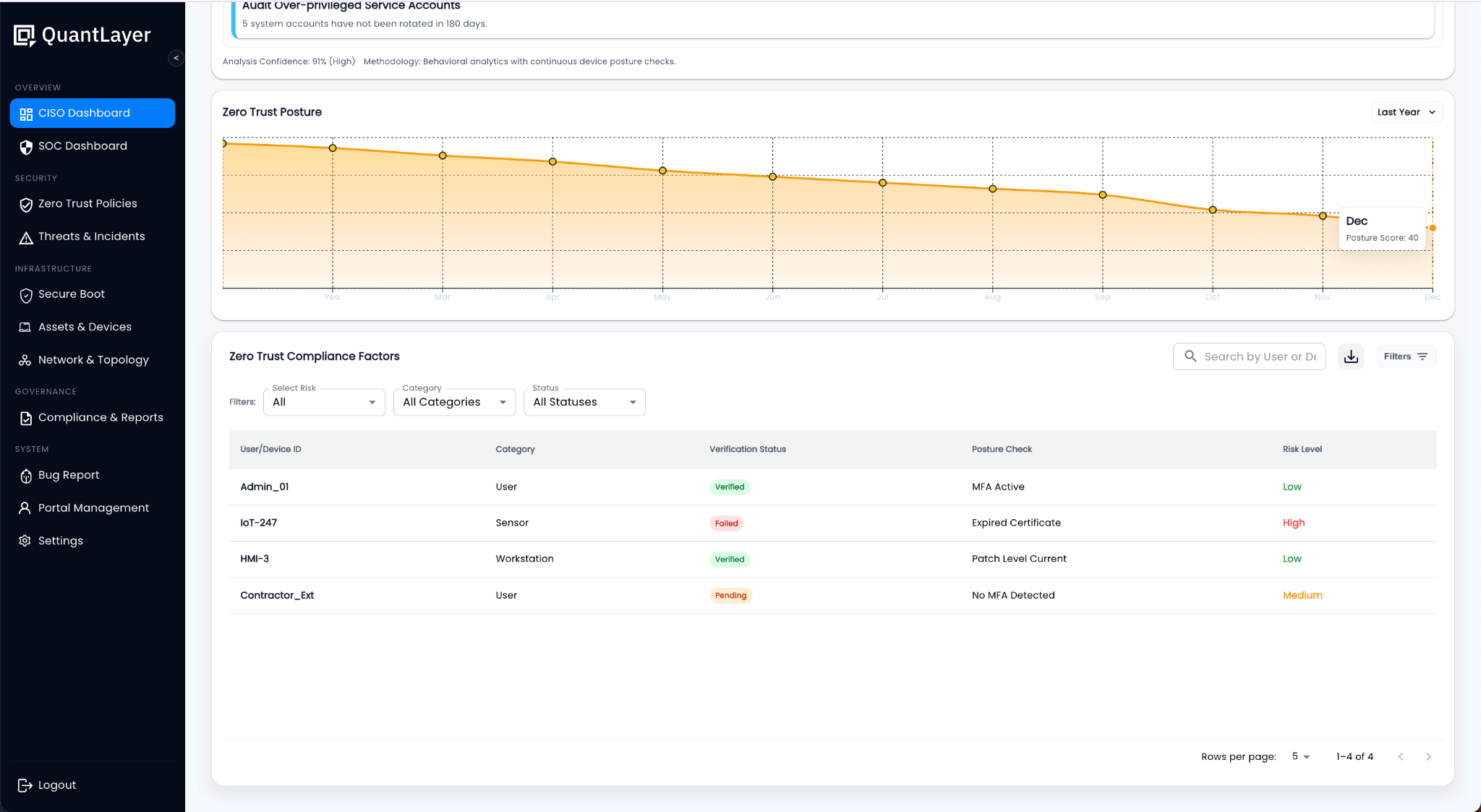
Tracks posture trend over time and lists the specific user/device factors contributing to verification status and risk level.
What it shows
Posture trend tells you whether your Zero Trust program is strengthening or slipping. Compliance Factors explain the “why” at a user/device level-useful for targeted remediation.
How it’s calculated
- Posture score aggregates identity assurance, device trust, policy enforcement, and exception load.
- Compliance factors list verification status and the failed check (e.g., expired cert, no MFA, patch level).
- Risk level reflects impact + exploitability + proximity to critical zones.
What to do next
- 1Fix recurring failed checks(expired certs, missing MFA) with automation and enforcement.
- 2Reduce exceptionsby converting to staged policies and compensating controls.
- 3Segment external accessfor contractors and partners into constrained conduits.
- 4Use trendlineto communicate progress to executives and regulators.
KPIs to watch
Posture score
trend
Failed checks
count
High-risk identities
count
Why this matters to a CISO
AI only works if it’s trustworthy
If models drift or confidence drops, you’re flying blind. This keeps the AI layer honest.
Drift is normal in OT
New firmware, new shifts, new processes-all cause drift. You need to detect it early before it erodes detection quality.
Confidence drives automation
You can’t let AI auto-contain based on shaky confidence. This metric ensures automation stays aligned with risk appetite.
Feedback loops improve accuracy
Every analyst decision sharpens the models. This closes the loop between human intelligence and machine learning.
Reference UI Screenshot